
Casings We Cast
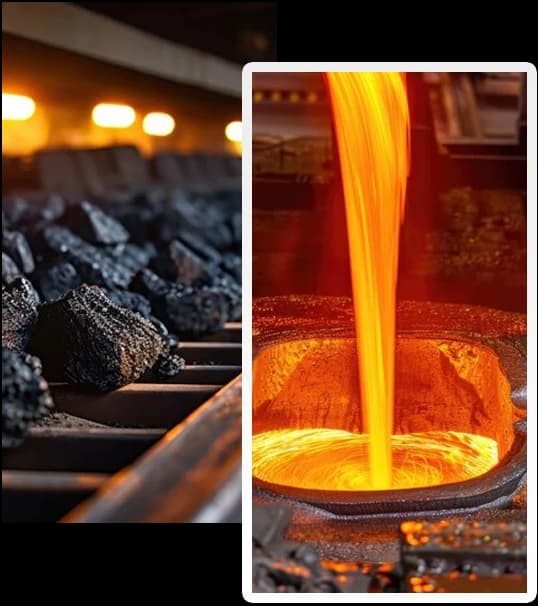
As a comprehensive pump casting manufacturer, we cast highly complex outer shells that safely contain high-pressure fluids in rigorous industrial environments.
Guaranteeing Pressure Integrity
The pump casing (or volute) acts as the primary pressure boundary. Any porosity or micro-shrinkage in the casting can lead to leaks, pressure drops, and catastrophic failure. That is why tier-1 OEMs rely on a dedicated pump casing casting manufacturer.
At Neocast Alloys, an ISO certified foundry, we guarantee the structural integrity of every casing. Our rigorous in-house NDT lab performs 100% radiography (X-Ray) and dye penetrant testing to ensure zero-defect delivery.
By utilizing the investment casting process rather than sand casting, we deliver pump parts with excellent internal cavity finishes. This reduces fluid turbulence, thereby increasing pump efficiency, and significantly lowers the extensive CNC machining required to finish custom alloy flanges and mating surfaces.
Frequently Asked Questions
Q.What is the difference between a pump casing and a housing?
In the pump industry, the terms are largely interchangeable. The casing (or volute housing) is the outer pressure-retaining boundary that directs the fluid from the impeller to the discharge nozzle.
Q.Are your pump casings pressure tested?
Yes, absolute pressure integrity is critical. As a specialized pump casing casting manufacturer, we utilize in-house NDT including radiography (X-Ray) and dye penetrant testing to ensure zero porosity and no leakage.
Q.Why choose investment casting over sand casting for pump casings?
Investment casting produces a much smoother internal surface finish. In a volute casing, this smooth finish reduces fluid friction, significantly improving the pump's overall hydraulic efficiency compared to a rough sand casting.
Q.What alloys do you cast pump casings in?
We cast casings in WCB (Carbon Steel), CF8M (316 Stainless), CD4MCU (Duplex), and various high-nickel alloys depending on the corrosiveness and temperature of the fluid being pumped.
Last updated: May 2026